
Winners and Laggards: Beauty in H1 2026
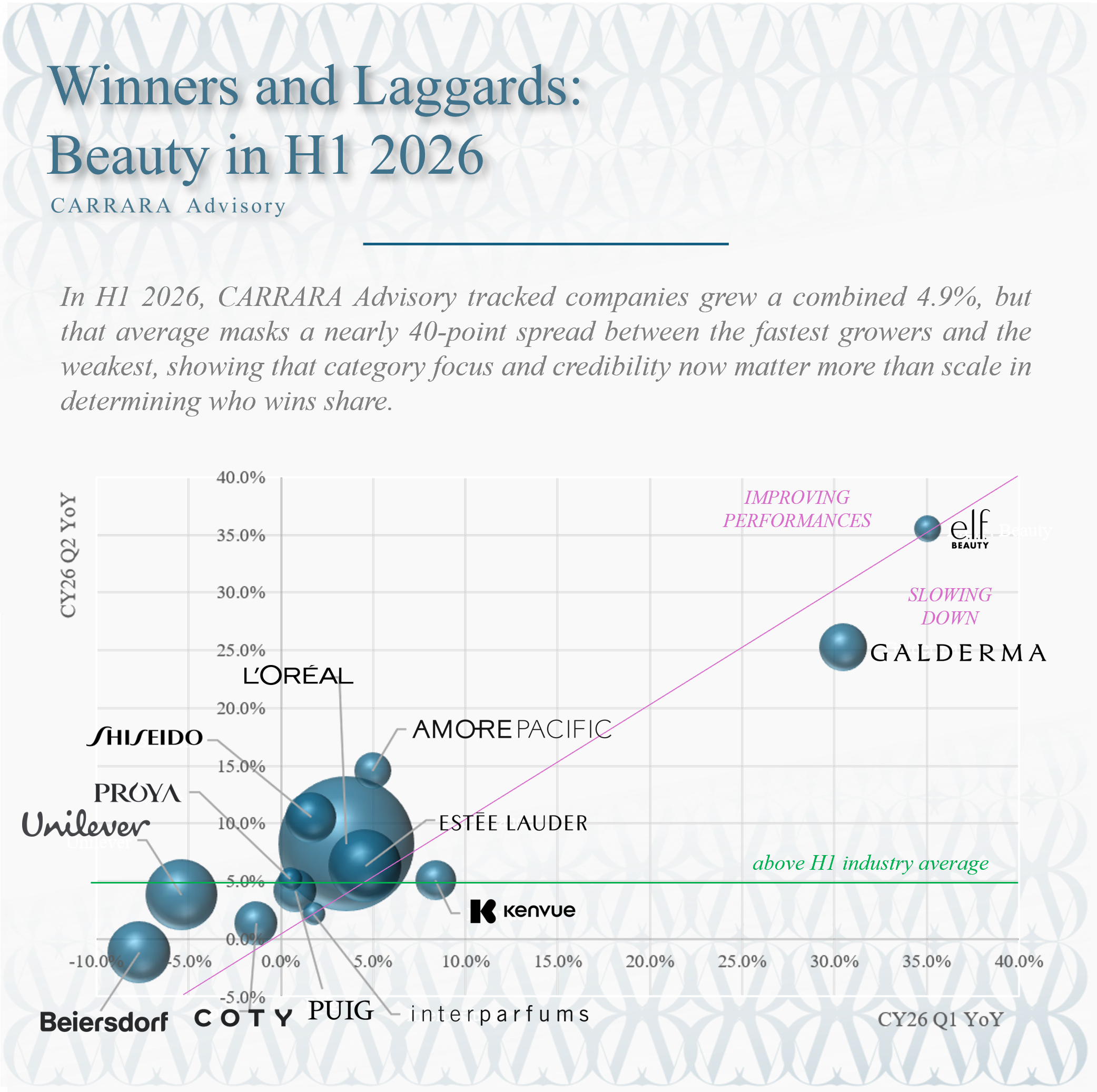
The global beauty and personal care industry closed the first half of 2026 with a picture of overall resilience sitting on top of considerable divergence beneath the surface. Across the thirteen companies CARRARA Advisory tracks as a benchmark for the sector, combined revenues reached USD 63,616 million in the first six months of the year, up 4.9 percent against the same period in 2025. The pace of that expansion was uneven through the half: the cohort grew 2.6 percent in the first quarter and then accelerated to 7.4 percent in the second, a clear sequential improvement that suggests consumer demand for beauty firmed up as the year progressed rather than weakened.
Figures throughout this report are expressed in USD million and reported at constant exchange rates, so that comparisons between the first and second quarter, and against the prior year, are not distorted by currency movements. Figures reflect the beauty and personal care operations of each company. For diversified groups, the revenue shown corresponds to the relevant beauty, personal care or dermatology segment rather than total corporate turnover.
Behind the aggregate number, the half told two different stories. A handful of companies, led by dermatology specialist Galderma and mass beauty disruptor E.L.F. Beauty, posted growth rates well above the group average and, in some cases, above almost anything the wider consumer sector produced. At the other end, Beiersdorf and Unilever spent much of the period working through pressure in mass market categories, with Beiersdorf still in negative territory by June and Unilever only just returning to growth. The companies in between, from L'Oreal to the fragrance specialists, delivered a more moderate but broadly positive picture. Understanding why this spread opened up, and what it means for the second half of the year, is the purpose of this report.
EXECUTIVE SUMMARY
The first half of 2026 confirmed a structural divergence across global beauty. Aggregate revenue across the thirteen tracked companies grew 4.9 percent, with growth accelerating meaningfully from 2.6 percent in the first quarter to 7.4 percent in the second. That acceleration was broad based, touching mass, prestige and dermatological categories alike, and points to a genuine improvement in underlying demand rather than a one off effect at a single company. E.L.F. Beauty was the fastest growing company in the benchmark at 35.3 percent for the half, followed by Galderma at 27.7 percent, both sustaining exceptional growth across both quarters rather than in a single spike. Amore Pacific and Shiseido led a broader recovery across Asian heritage houses, while Kenvue and Estee Lauder posted steady, high single digit gains. Unilever swung from a first quarter decline into second quarter growth, ending the half essentially flat, while Beiersdorf remained the only company in the cohort to post a negative half year result. Puig, Interparfums and Coty delivered a calmer, low single digit picture consistent with a fragrance category that has moved past its post pandemic surge into a more normalized growth rate. Taken together, the results argue that brand relevance, category focus and execution discipline now matter more than sheer corporate scale in determining who wins share in global beauty.
THE SEQUENTIAL REBOUND: FROM A CAUTIOUS OPENING TO A STRONGER SECOND QUARTER
The jump from 2.6 percent aggregate growth in the first quarter to 7.4 percent in the second is the single most important pattern in this report. Ten of the thirteen companies in the benchmark grew faster in the second quarter than in the first, and even the two companies that remained in decline for the full half, Unilever and Beiersdorf, narrowed their rate of contraction considerably between the two periods.
Several forces plausibly explain this pattern. Retailers across Europe and North America entered 2026 managing inventory cautiously after a period of elevated interest rates and cost pressure, which weighed on wholesale orders in the opening months of the year even where underlying consumer demand held up better than shipment data implied. As the half progressed, replenishment cycles caught up with actual sell through, feeding into stronger reported growth in the second quarter. At the same time, several of the fastest growing names in the cohort, notably Galderma and E.L.F. Beauty, entered the year with strong product launch calendars and expanding distribution that built momentum as the half unfolded, rather than a one off surge concentrated in a single quarter.
The China market also played a role in the shape of the recovery. Companies with meaningful China and broader Asia Pacific exposure, including Shiseido and Amore Pacific, posted a materially stronger second quarter than first, consistent with the gradual stabilization in Chinese consumer sentiment and travel retail activity that has been widely reported across the sector this year. PROYA, operating almost entirely within mainland China, followed the same pattern, moving from a nearly flat first quarter to solid mid single digit growth in the second.
None of this means the environment has become uniformly easy. Beiersdorf's results show that mass market personal care in Europe remains under real pressure from cautious consumers and private label competition, and Coty's essentially flat half illustrates how difficult it remains to grow a portfolio split across mass and prestige simultaneously. The sequential improvement is real, but it has not lifted every company equally.
SCALE VERSUS SPEED: THE MEGA CAP LANDSCAPE
L'Oreal: The Benchmark for Balanced Growth
L'Oreal remains, by a wide margin, the largest company in the CARRARA Advisory benchmark, generating USD 25,729 million in revenue over the first half, more than triple the next largest competitor in the cohort. Growth accelerated through the half, from 3.6 percent in the first quarter to 8.2 percent in the second, for a half year rate of 5.8 percent, comfortably ahead of the group average and a strong result for a company of its size.
The breadth of L'Oreal's divisional structure, spanning luxury, consumer products, professional and dermatological beauty, continues to be its main defense against localized weakness in any single channel or geography. Where department store and travel retail spending softened in parts of the world, the group's mass and professional lines appear to have absorbed part of that demand, and the marked step up between the first and second quarter is consistent with a stronger seasonal launch calendar and improving point of sale conditions across Western markets as the half progressed.
Estee Lauder: A Steadier Second Half of Recovery
Estee Lauder posted the second strongest half year growth rate among the four mega caps in the benchmark, expanding 5.4 percent to reach USD 7,339 million in revenue, with growth of 4.6 percent in the first quarter building to 6.3 percent in the second. This continues a pattern of gradual stabilization for a business that spent much of the past several years working through inventory normalization in Asian travel retail and shifting consumer channels in North America.
The consistency of Estee Lauder's growth across both quarters, rather than a sharp swing in either direction, suggests the corrective actions the company has taken around distribution discipline and channel mix are now showing through in steadier top line performance. Sustained strength in prestige fragrance and a renewed focus on core skincare franchises appear to be the operational threads holding that consistency together.
Unilever and Beiersdorf: Two Different Trajectories in Mass Beauty
The gap between the two companies most exposed to mass personal care in this benchmark widened over the course of the half. Unilever's beauty and personal care operations fell 5.4 percent in the first quarter before recovering to growth of 3.8 percent in the second, leaving the half essentially flat at negative 0.8 percent. That represents a genuine turnaround in trajectory, even if the half year figure itself remains below zero, and is broadly consistent with public reporting that the group has been raising its guidance for the category as the year has progressed.
Beiersdorf's experience was harder. The company's beauty and personal care revenue fell 7.7 percent in the first quarter and remained in decline, albeit at a slower pace of negative 1.2 percent, in the second, for a half year contraction of 4.5 percent, the weakest result of any company in the benchmark. This pattern is consistent with public commentary from the company itself pointing to a more challenging skin care market in Europe and continued pressure on replenishment orders from retailers managing tighter inventories. Beiersdorf's core skincare franchises appear to retain brand strength even as the broader mass portfolio around them struggles, which is the central operational tension the company will need to resolve through the second half of the year.
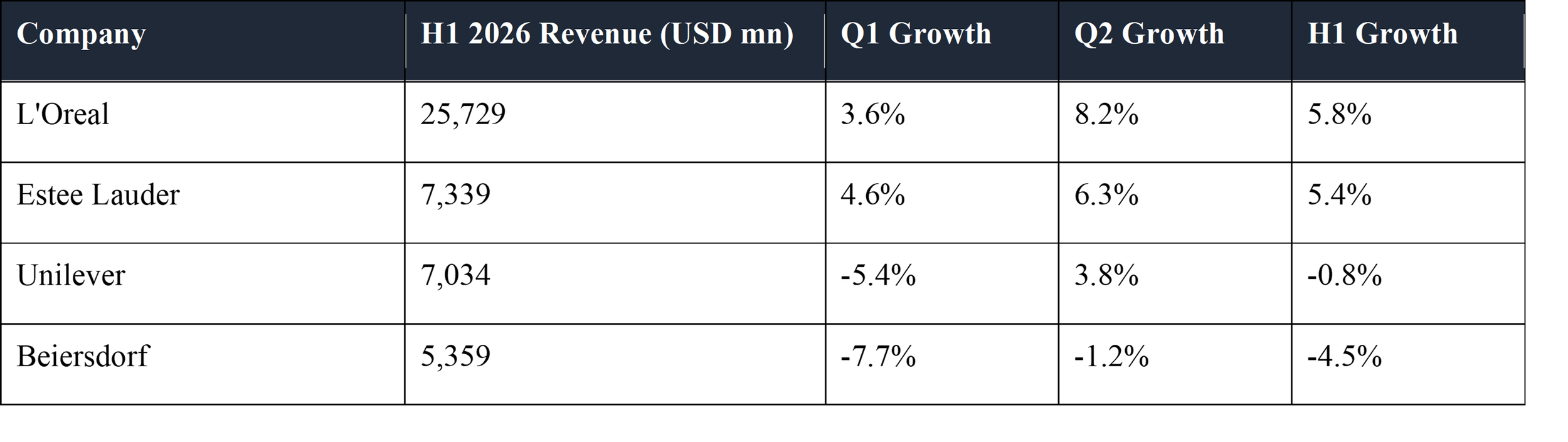
Exhibit 1. The four largest companies in the CARRARA Advisory beauty benchmark, ranked by H1 2026 revenue in USD million at constant exchange rates. Source: CARRARA Advisory analysis.
THE HIGH GROWTH COHORT: SCIENCE, SCALE AND NEW BRANDS
Galderma: Dermatology Sets the Pace
Galderma delivered the second fastest half year growth rate in the entire benchmark at 27.7 percent, on revenue of USD 3,148 million, making it the clearest example in this cohort of a specialist beauty company outgrowing the broader market by a wide margin. Growth was strong and consistent across both quarters, at 30.5 percent in the first and 25.3 percent in the second, rather than concentrated in a single period, which points to durable demand rather than a temporary effect.
Galderma operates at the meeting point of dermatology and aesthetics, spanning injectable treatments, prescription grade skincare and therapeutic dermatology, and has continued to expand its footprint in physician and clinic channels over the course of the year, including the ongoing rollout of newer therapeutic and injectable products that have drawn considerable attention across the industry press in 2026. That positioning has insulated the company from much of the department store and mass retail volatility affecting other names in this report, and the consistency of its growth across both quarters is a strong signal that clinical credibility continues to command a premium with consumers.
E.L.F. Beauty: The Fastest Grower in the Benchmark
E.L.F. Beauty posted the highest growth rate of any company tracked in this report, expanding 35.3 percent over the half to reach USD 929 million in revenue, with growth of 35.1 percent in the first quarter and 35.5 percent in the second. This is a genuinely exceptional result relative to the rest of the cohort, more than six times the group average, and it was sustained rather than a single quarter anomaly.
Part of this performance reflects the continued strength of E.L.F.'s core value driven cosmetics and skincare business in the United States, which has consistently taken share from larger, higher priced competitors. Part of it also reflects the group's expanding brand portfolio, including its widely reported acquisition of the Rhode skincare brand, which closed earlier in 2026 and has since been integrated into the company's reported results. Because the split between organic growth and the contribution from newly acquired brands is not disclosed in the dataset underlying this report, readers should treat the 35.3 percent figure as a blended measure of the group's full portfolio rather than assume it reflects organic momentum in the legacy business alone. Either way, E.L.F. Beauty's scale and growth trajectory have clearly moved it into a different league than the value cosmetics disruptor it was a few years ago.
Kenvue: A Steady Contributor Ahead of Change
Kenvue's skin health and beauty operations grew 6.7 percent over the half to reach USD 2,172 million in revenue, with an especially strong first quarter of 8.4 percent moderating to a still healthy 5.1 percent in the second. This is a solid, above average result for a business built around daily use skincare and dermatologist recommended brands sold through mass, grocery and pharmacy channels.
Kenvue's steady growth profile reflects the defensive characteristics of its category mix, which tends to see more predictable replenishment than discretionary color cosmetics or fragrance. The company has also been the subject of considerable corporate attention this year following reports of acquisition interest from Kimberly-Clark, a development that will be worth watching closely alongside the underlying operating trends captured in this benchmark.
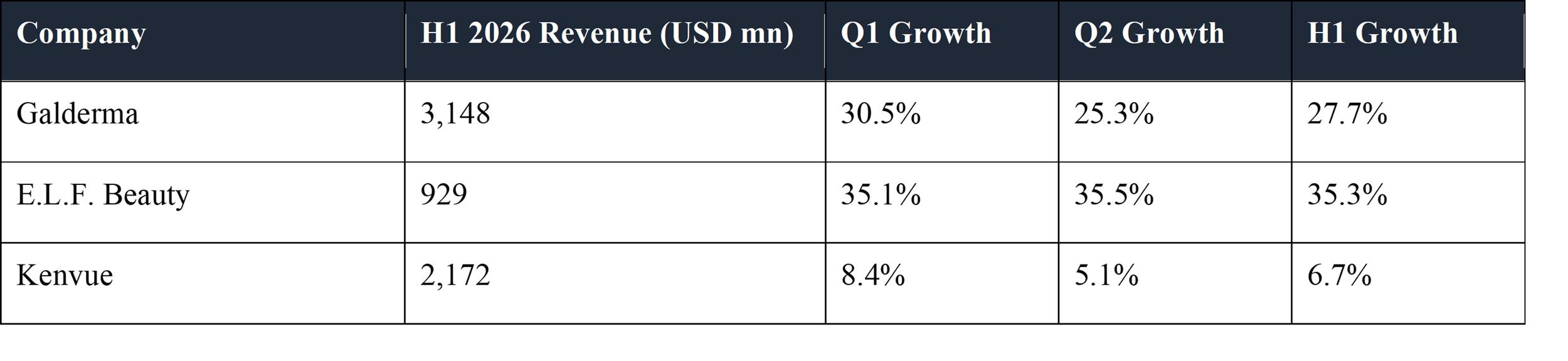
Exhibit 2. The high growth cohort of the benchmark, led by dermatology and mass value skincare. Revenue in USD million at constant exchange rates. Source: CARRARA Advisory analysis.
ASIA REBALANCES: SHISEIDO, AMORE PACIFIC AND PROYA
Shiseido: A Clear Second Quarter Recovery
Shiseido's growth accelerated sharply through the half, from 1.6 percent in the first quarter to 10.5 percent in the second, for a half year rate of 6.2 percent on revenue of USD 3,521 million. That second quarter figure is among the strongest of any company in the benchmark and points to a meaningful improvement in trading conditions across the company's core Japanese and broader Asian markets as the half progressed.
This recovery is consistent with wider industry reporting this year pointing to improving travel retail activity and a gradual return of Chinese consumer spending on premium beauty, alongside Shiseido's own efforts to sharpen its focus on premium skin health and defend brand equity against heavily discounted competitors in its home market.
Amore Pacific: International Expansion Gathers Pace
Amore Pacific delivered the third fastest half year growth rate in the entire benchmark at 9.6 percent, on revenue of USD 1,833 million, with growth building from 5.0 percent in the first quarter to a strong 14.5 percent in the second. That acceleration lines up with public reporting this year describing the company's expanding presence across North America, Europe and Japan, alongside continued strong demand for Korean skincare formulations and ingredient led routines in Western markets.
PROYA: Consistent Execution in a Cautious Domestic Market
PROYA, which operates almost entirely within mainland China, grew revenue 3.1 percent over the half to USD 769 million, with a nearly flat first quarter of 0.5 percent building to 5.2 percent growth in the second. Given how cautious Chinese consumer spending has been through parts of 2026, this represents a resilient result and is consistent with reporting that the company has continued to invest in digital and social commerce channels while also taking initial steps to expand its footprint into prestige retail outside China.
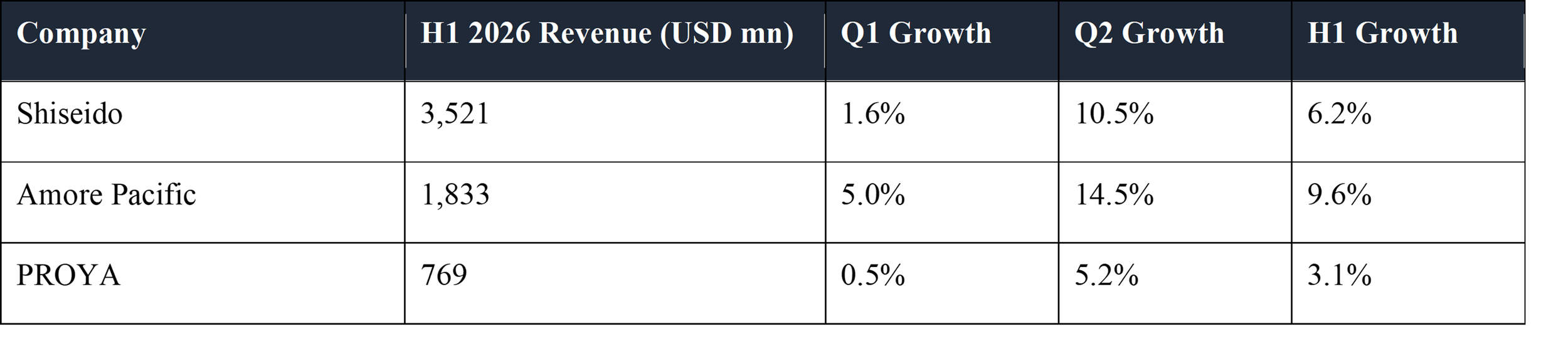
Exhibit 3. Asian heritage and domestic champions in the benchmark. Revenue in USD million at constant exchange rates. Source: CARRARA Advisory analysis.
FRAGRANCE AND MID CAP RESILIENCE: PUIG, INTERPARFUMS AND COTY
The three fragrance weighted companies in the benchmark, Puig, Interparfums and Coty, delivered the calmest results in this report, consistent with a category that has moved past the rapid post pandemic growth it enjoyed a few years ago into a more mature, normalized expansion rate.
Puig: Modest but Positive Momentum
Puig grew revenue 2.4 percent over the half to USD 2,547 million, with growth building from a soft 0.8 percent in the first quarter to a firmer 4.2 percent in the second. That trajectory is consistent with a portfolio of fashion heritage fragrance and beauty brands that depends heavily on travel retail and European and American department store replenishment, both of which improved as the half progressed.
Interparfums: Steady, Predictable Growth
Interparfums posted the most stable growth profile of any company in the entire benchmark, at 1.8 percent in the first quarter and 2.2 percent in the second, for a half year rate of 2.0 percent on revenue of USD 686 million. This consistency reflects the nature of the company's licensed fragrance portfolio, where demand tends to be more predictable than in the mass or prestige skincare categories represented elsewhere in this report.
Coty: A Portfolio Still Finding Its Balance
Coty's revenue was effectively unchanged over the half at USD 2,551 million, with a 1.3 percent decline in the first quarter offset almost exactly by 1.3 percent growth in the second, for a flat half year result. This pattern illustrates the challenge of managing a portfolio split between mass color cosmetics, where shelf space and price competition remain intense, and prestige fragrance, where licensing relationships continue to provide a more stable base of demand.
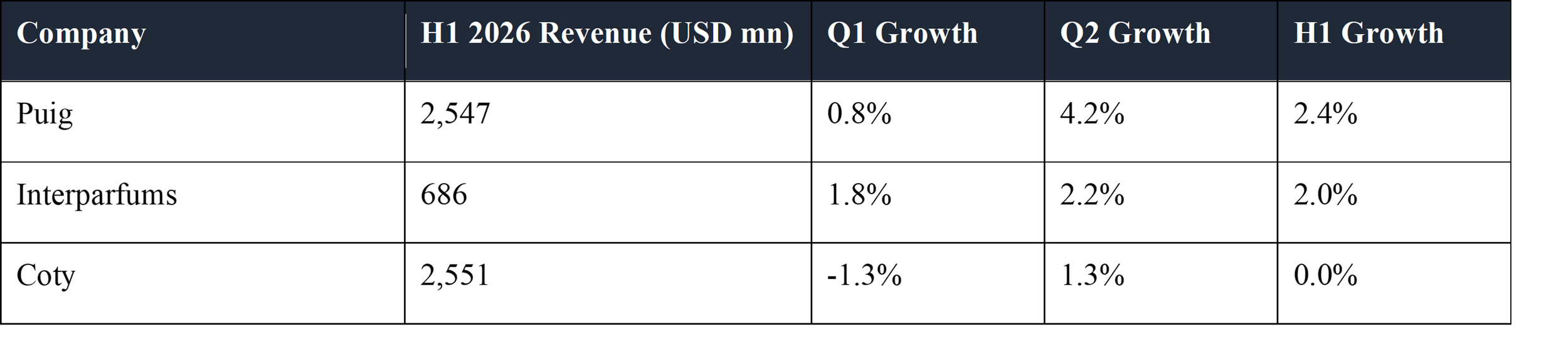
Exhibit 4. Fragrance weighted and mid cap specialists in the benchmark. Revenue in USD million at constant exchange rates. Source: CARRARA Advisory analysis.
