
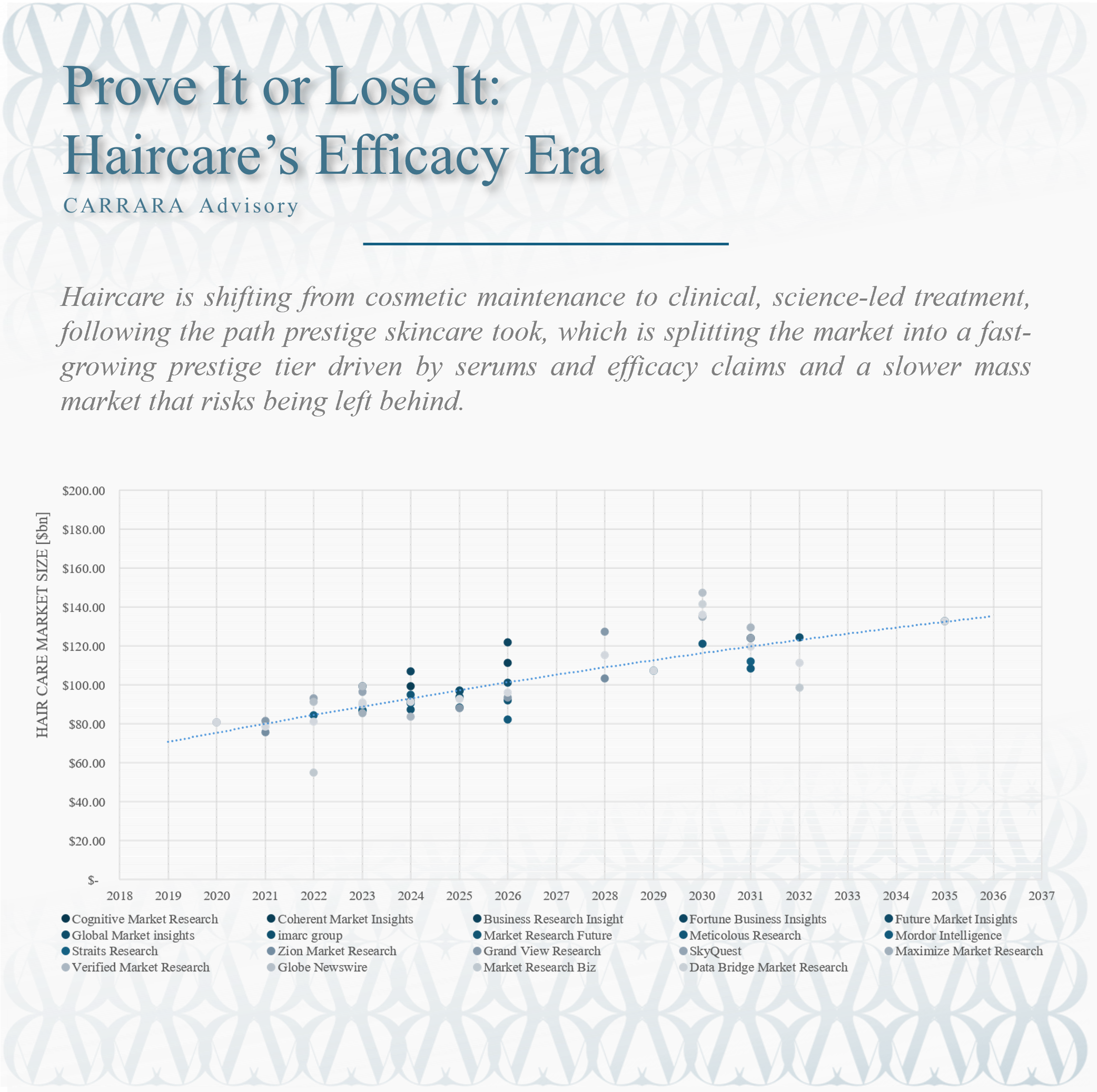
The global haircare industry is experiencing a fundamental structural transition. For decades, the sector functioned primarily as a category defined by aesthetic maintenance, where consumer loyalty was built upon fragrance, cosmetic conditioning, and the promise of surface level styling. CARRARA Advisory observes that this historical reliance on simple cleansing and moisturizing is being replaced by a demand for high performance, clinical grade outcomes. This shift mirrors the trajectory seen in the prestige skincare industry, which transitioned from basic hydration toward active, efficacy driven and clinically tested protocols decades ago. As consumers treat their hair with the same rigor once reserved for their complexions, the definition of what constitutes a primary haircare product is undergoing a permanent revision.
This evolution is not merely a change in branding or a temporary trend in consumer behavior. It represents a deeper alignment with advanced science and ingredient led solutions. We have identified that the modern consumer evaluates haircare products based on tangible physiological changes rather than subjective sensory experiences. This transition toward clinical treatment necessitates significant capital expenditure in research and development, forcing legacy entities and emerging disruptors to prioritize molecular science over traditional cosmetic formulation. Consequently, the commercial stakes are rising, as the market begins to bifurcate between brands that can prove efficacy and those that cannot.
EXECUTIVE SUMMARY
The haircare industry is pivoting from basic cosmetic maintenance to a model defined by clinical grade treatment, effectively mirroring the professionalization and scientific maturation of the prestige skincare sector.
This structural realignment is driving a divergence in market performance, with prestige segments currently outpacing traditional retail models through a reliance on performance driven, high value product innovations.
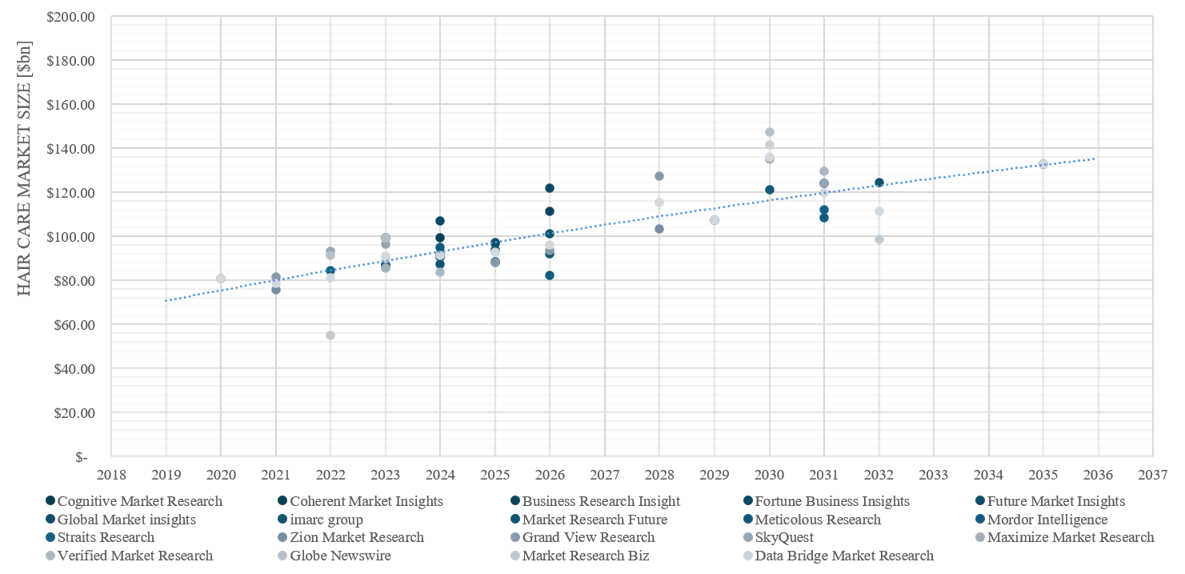
Investors and operators must recognize that the long term growth trajectory of the sector, which reaches toward a global professional market valuation of about 34 billion USD by 2025 (Source: average of multiple researches), is inextricably linked to this transition toward science led, outcome oriented consumer experiences.
The shift toward professionalization within the haircare category is becoming a primary driver of financial value. As organizations move to capture the growth of this high performance demand, they are deploying assets that emphasize the intersection of clinical results and consumer education. The maturation of the category is evidenced by significant corporate activity, such as the Wella Company IPO filing, which reflects a 4.3 billion USD valuation at the time of the filing (Source: Reuters, 2026-08). This valuation suggests that financial markets are placing an increasing premium on entities that can command authority in both professional and retail environments.
We analyze this professionalization as a response to a more sophisticated consumer base that demands accountability from its products. When brands shift their value proposition to align with clinical expectations, they necessarily shorten the distance between laboratory development and consumer adoption. This acceleration creates secondary effects, such as the increased importance of scalp health as a medicalized concern. As we examine the broad market reach of this change, it is clear that the industry is preparing for a future where hair maintenance is viewed as a prerequisite of personal health rather than a luxury choice. The companies that navigate this shift successfully will distinguish themselves not by their ability to maintain the status quo, but by their capacity to redefine the standards of hair treatment.
THE SKIN-IFICATION OF HAIR
The consumer approach to hair maintenance has undergone a structural pivot. We observe a convergence between the prestige beauty sector and traditional haircare, where the vocabulary of dermatological skincare has become the primary driver of value. This transition reflects a shift in consumer expectations: the modern purchaser no longer seeks merely cleansing or conditioning, but rather targeted molecular intervention for the scalp and hair fiber. The mechanism of this change is rooted in the transfer of diagnostic habits from the vanity table to the shower stall.
Consumers now analyze their hair through the lens of individual ingredient efficacy. Where brands once relied on generic descriptors such as moisture or shine, the current market prioritizes specific bio active compounds and concentrated delivery systems. This mimics the historical progression of the facial skincare industry, which transitioned from broad spectrum moisturizers to regimen based routines using serums, acids, and clinical grade extracts. We identify this shift as a pursuit of functional transparency. The consumer intent is now centered on solving specific biological concerns, such as follicle density or structural integrity, rather than fulfilling a general aesthetic need.
The adoption of serum led routines represents the most significant second order effect of this trend. Serums, which were once niche additions to a haircare regimen, have become architectural components of the daily routine. This is evident in the trajectory of the prestige segment, where the market has prioritized high concentration formats. As consumers apply the rigorous standards of skincare to their hair, they demand the same level of accountability for results. This requirement forces brands to shift from marketing heavy product launches to evidence based development. The implication for incumbents is substantial: the cost of entry is no longer defined by brand equity alone but by the demonstration of measurable efficacy through science led formulations.
We see this in the way consumers curate their shopping lists. When a buyer selects a product today, the selection process incorporates criteria formerly reserved for dermatology. This includes checking for non comedogenic properties in scalp products and looking for the absence of specific irritants in shampoos. Because the consumer views the scalp as an extension of the facial skin, the distinction between these two categories is eroding. Retailers have begun to reflect this by placing hair treatments in the same proximity as luxury serums and toners. The expectation of performance now dictates that a hair serum should provide as much tactile and visible change as a retinol treatment or a vitamin C serum.
The consequences of this behavioral shift are twofold. First, it enables a premiumization of the category that allows for higher price points, as the consumer justifies expenditure through the language of clinical investment rather than discretionary luxury. Second, it creates a feedback loop where rapid innovation is required to maintain share. As brands iterate on specific active ingredient profiles, the pace of obsolescence for static, legacy product lines accelerates.
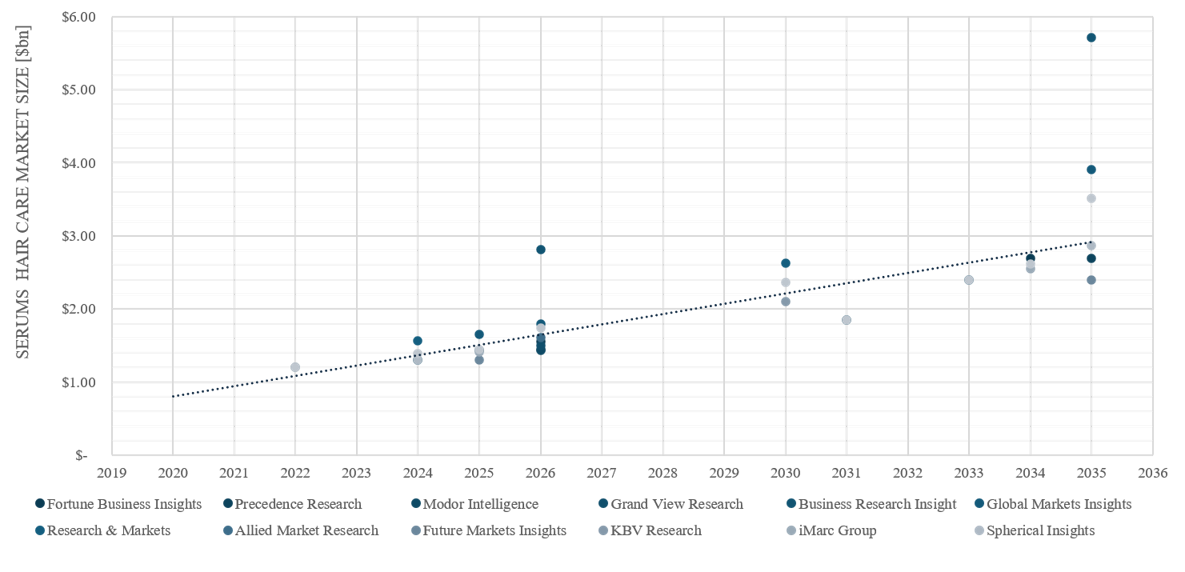
Our analysis suggests that this process is self reinforcing. As the market experiences a growth rate of hair serums (estimated to reach 1.74 billion USD in 2026), we recognize that this is not merely a transient preference but a fundamental reordering of consumer behavior. The expectation of clinical results at the individual strand level ensures that the skin-ification of hair remains the defining characteristic of the industry. The industry has moved past the era of surface level cosmetics and entered a phase where every product must justify its existence through the lens of quantifiable improvement and diagnostic utility.
MARKET PERFORMANCE: A DUAL-SPEED ECONOMY
The haircare industry is currently experiencing a period of intense structural bifurcation. CARRARA Advisory identifies this as a two speed economic model, where the growth trajectories of prestige and mass market segments have decoupled significantly. This divergence is not merely a consequence of inflationary pressures or varying consumer demographics; it represents a fundamental shift in the valuation of haircare as an asset class and a daily necessity. The internal data for H1 2026 confirms that while the broader market remains functional, the prestige sector is capturing the vast majority of incremental value through a focus on specialized, high performance formulations.
The prestige segment demonstrated notable momentum in the first half of 2026, recording a 11% growth rate in sales (Source: Global Cosmetic Industry, 2026-09). This figure is accompanied by an 8% growth rate in units sold within the same period (Source: Global Cosmetic Industry, 2026-09). The gap between sales growth and unit growth suggests that consumers are not only increasing their frequency of purchase but are also demonstrating a willingness to absorb price increases for products that promise superior performance. This behavior signals a shift away from habitual, maintenance based consumption toward an outcome oriented purchasing pattern.
In direct contrast, the mass market segment grew by 7% in sales during H1 2026 but units dipped (Source: Global Cosmetic Industry, 2026-09). While this remains a positive growth trajectory in sales, the delta between the mass market and the prestige segment highlights the limitations of traditional distribution and commodity style product development. Mass market growth tends to relies heavily on volume and accessibility, whereas prestige growth is fueled by functional specificity and the integration of advanced science into the home care routine.
The most extreme example of this bifurcation is found in the hair serum category. In 2025, hair serums market grew by 4-5% and based on first six months performances we do expect in 2026 a grow rate of 15-20%. This performance indicates that consumers are increasingly treating hair health with the same level of analytical scrutiny applied to facial skincare. Serums act as the bridge between simple maintenance and targeted treatment, addressing specific physiological concerns rather than providing generalized cleansing or conditioning.
The mechanism behind this growth involves a feedback loop of heightened consumer expectation. As prestige brands introduce clinical grade serum technology, the baseline expectation for all haircare products shifts upward. Consumers who witness the efficacy of a serum are likely to demand similar results from other steps in their regimen. This creates a drag on mass market products that fail to innovate, as they risk being viewed as obsolete tools in an increasingly sophisticated regimen.
CARRARA Advisory observes that the success of prestige products in H1 2026 is linked to the intentional positioning of haircare as a restorative practice. The growth rate of hair serums serves as a primary indicator of where capital and consumer interest are flowing. When compared to the mass market sales growth, the trend is clear: value is currently migrating to the categories that occupy the intersection of medical grade science and high frequency usage.
The implication for incumbents is that growth is no longer a guaranteed outcome of distribution reach. Instead, growth is a byproduct of solving specific, identified problems. The prestige segment has successfully utilized this period to transition from a discretionary indulgence into an essential component of a personal health routine. This transition explains why the prestige sector maintains its momentum even when wider economic signals suggest a more cautious consumer environment. We anticipate that this dual speed dynamic will continue to dictate the allocation of marketing spend and R&D resources across the industry for the remainder of the decade.
THE RISE OF CLINICAL EFFICACY AND BIOTECH
The acceleration of the haircare sector is increasingly tethered to the deployment of rigorous research and development, as consumer expectations shift from superficial cleansing to molecular restoration. We observe that science led innovation now serves as the primary differentiator in a crowded market. This is not merely a marketing pivot; it represents a fundamental transition in how firms allocate capital toward product development. The capability to articulate the mechanism of action behind a formula has become the baseline requirement for maintaining brand relevance among an increasingly informed consumer base.
Our analysis of contemporary growth trajectories indicates that brands prioritizing clinical validation and proprietary biotechnology are outperforming traditional market participants. This performance disparity is evident in the H1 2026 data, which reveals that science led Unilever brands, specifically K18, and Sunsilk, achieved a growth rate described as double-digit during this period (Source: Unilever, 2026-10). The success of these entities suggests that the integration of laboratory backed credentials into the consumer value proposition creates a compounding effect on brand loyalty and retail velocity.
The mechanism driving this phenomenon is rooted in the transfer of credibility from the professional clinical sphere to the mass market environment. When a brand like Dove or Sunsilk adopts the language and efficacy standards traditionally reserved for prestige or salon exclusive channels, it resets the competitive floor. For legacy manufacturers, the imperative is to reconcile high volume distribution models with the technical complexity of clinical treatments. We argue that the success of these science led brands in the first half of 2026 serves as a proof of concept for the broader industry: consumers are willing to pay a premium when they perceive that the chemical or biological composition of a product is superior to standard alternatives.
Furthermore, the rise of biotech in haircare mirrors trends observed in the pharmaceutical and skincare industries. Firms are investing in targeted delivery systems and bio synthetic ingredients that address specific hair pathologies rather than providing blanket cosmetic coverage. This technical evolution necessitates a longer and more capital intensive R&D cycle. The implications for the competitive environment are significant. Smaller, agile firms that hold specific biotechnology patents are becoming targets for acquisition by larger conglomerates seeking to bypass internal R&D lags. This strategy allows larger entities to absorb the clinical reputation of smaller, high growth innovators while using their existing supply chains and global distribution networks to scale these products rapidly.
As companies continue to pivot toward this model, the second order effect is a heightened barrier to entry for brands relying solely on aesthetic packaging or legacy brand recognition. In the current economic cycle, the ability to demonstrate, quantify, and communicate biological efficacy is the critical determinant of long term commercial viability. Our analysis suggests that the double-digit growth achieved by science focused brands in H1 2026 is indicative of a permanent reallocation of consumer expenditure toward high performance categories.
We maintain that the ongoing professionalization of R&D functions within major personal care organizations will continue to accelerate as the market matures. As these firms refine their ability to translate complex molecular data into consumer facing benefits, the gap between science led brands and those lacking a clinical foundation will widen. For stakeholders, this shift dictates a transition in investment focus, favoring companies that treat hair not as a surface to be maintained, but as a biological structure requiring advanced treatment. The reliance on scientific evidence is now the primary lever for sustained growth, marking a departure from the historical reliance on lifestyle based advertising strategies.
PROFESSIONAL ASSETS AND FINANCIAL MATURITY
The professional haircare segment is undergoing a fundamental transformation in its capital profile and market positioning. CARRARA Advisory observes that the sector has transitioned from a fragmented collection of salon centric players into a sophisticated asset class defined by large scale institutional interest and public market readiness. This shift reflects a broader maturation of the beauty industry, where professional grade performance is no longer relegated to the back bar of a salon but serves as a foundational pillar for corporate valuation.
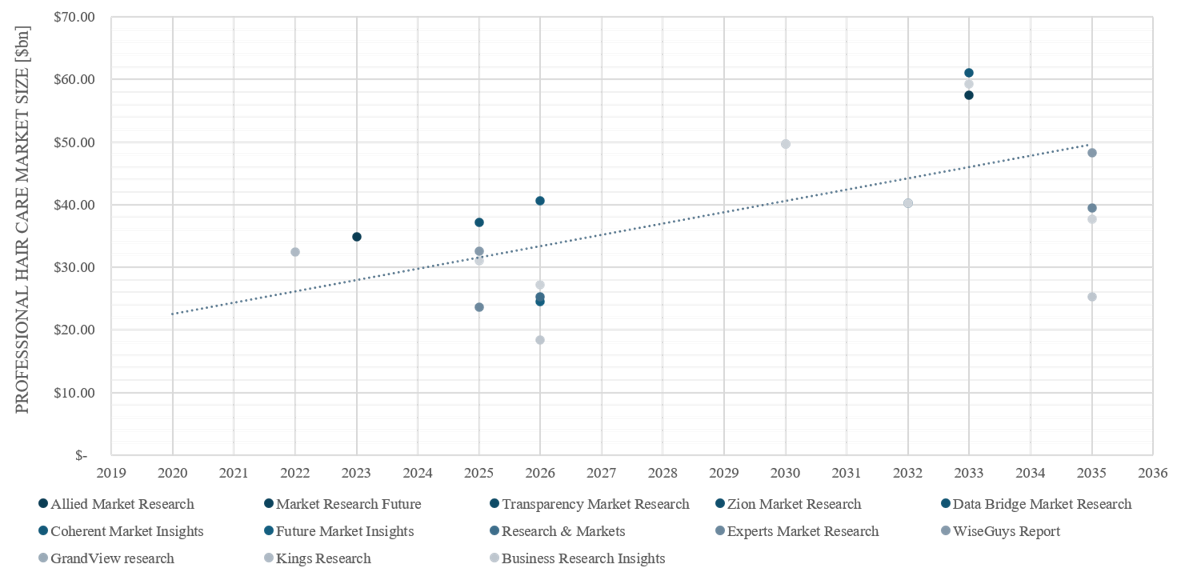
The global professional haircare market reached a valuation of about 34 billion USD in 2025. This figure underscores the sheer scale of the professional opportunity, yet the internal composition of this value reveals the true drivers of market strength. Within this professional environment, color care and treatment products currently command a 36.4% share of the market (Source: DataM Intelligence, 2026-07). The dominance of these categories indicates that professional assets are increasingly tied to high frequency, maintenance heavy consumer behaviors rather than purely discretionary services. Investors are pivoting toward these segments because they exhibit the sticky, recurring revenue characteristics typical of high performing skincare portfolios.
The financial maturity of this segment is perhaps best exemplified by the recent activity surrounding legacy professional brands. The IPO filing for the Wella Company, carrying a valuation of 4.3 billion USD at the time of the filing, provides a critical benchmark for how the public markets now perceive professional haircare assets (Source: Reuters, 2026-08). Such a valuation signals that these businesses are viewed not merely as providers of salon supplies, but as brand platforms capable of sustaining growth and delivering consistent returns. This event serves as a bellwether for the professional sector, suggesting that scale, combined with a strong brand identity, is the primary requirement for unlocking value in the current financial climate.
When evaluating the underlying mechanics of these professional assets, we observe a clear correlation between specialized focus and market capitalization. The ability to bridge the gap between professional salon utility and retail prestige is the primary lever for these valuations. As professional brands migrate toward broader distribution, they maintain the authority associated with their salon heritage while adopting the high margin practices of consumer facing luxury beauty. This dual track approach—securing the professional endorsement while capturing the retail consumer—creates a flywheel effect that strengthens the overall asset base.
The competitive dynamics within the professional space are further intensified by the concentration of capital. As global market projections suggest a movement toward 50 billion USD by 2035, we anticipate that the competition for professional shelf space and salon loyalty will sharpen. Companies are no longer competing simply on product efficacy; they are competing for control over the consumer relationship. The professional sector is moving toward a model of heightened accountability, where the financial performance of an asset is intrinsically linked to its success in proving, through clinical results or superior ingredient technology, that the professional promise holds true in the daily home routine of the user.
CARRARA Advisory assesses that the current focus on professional assets is driven by the search for resilience. In a broader economic context where consumer spending may fluctuate, the demand for professional grade treatments remains relatively shielded due to the habit forming nature of these products. As the market continues to evolve, we expect to see further consolidation of professional brands under parent companies that can provide the necessary capital for research and development to maintain this competitive edge. The valuation of entities such as the Wella Company serves as a marker that the professional category has successfully exited its niche status and entered the mainstream of financial consideration for large scale beauty conglomerates and private equity firms alike.
CHANNEL EVOLUTION: THE PROFESSIONALIZATION OF RETAIL
The traditional retail architecture for haircare is undergoing a foundational reordering. We observe a systematic migration of prestige and professional grade products from the exclusive confines of salon back bars into curated, high touch retail environments. This shift is not merely a change in distribution strategy; it represents a fundamental re-platforming of the consumer purchase journey. Retailers now prioritize the pedagogical value of their physical and digital footprints, aiming to replicate the diagnostic authority once held exclusively by professional stylists.
Central to this transformation is the integration of professional brands into broader prestige beauty ecosystems. As mass market platforms seek to capture the spending power of the high end consumer, they are increasingly adopting the boutique inventory models popularized by department stores and luxury retailers. For instance, current retail strategies now frequently aggregate vast portfolios of products to provide a comprehensive, clinical shopping experience. Platforms that now feature 90 prestige beauty brands provide a clear indication of this consolidation (Source: Morningstar, 2026-09). The density of these offerings—which often include as many as 1600 products within a single integrated environment—serves to legitimize the transition from casual consumerism to a regimen based purchasing model (Source: Morningstar, 2026-09).
This professionalization of the retail shelf creates a distinct competitive mechanism. When a consumer encounters professional grade hair treatments alongside established beauty staples, the product undergoes a semantic shift in the eyes of the purchaser. It ceases to be viewed as a commodity item and instead occupies the same cognitive space as high end skincare. The strategic intent here is the normalization of the consultation process within the retail floor. By incorporating brands that carry professional heritage, retailers force a comparison of quality and efficacy that favors high performance formulations.
The structural implications for brand owners are profound. To secure shelf space in these modernized environments, manufacturers must align their branding and packaging with the expectations of a consumer who expects retail parity with prestige beauty clinics. Retailers are no longer interested in passive inventory; they demand partners who contribute to the total educational value of the category. This necessitates a shift in trade marketing, where investment is redirected from simple point of sale displays toward training materials, digital diagnostic tools, and experiential zones that demonstrate product performance.
Furthermore, the expansion of these professional heavy retail channels suggests a long term recalibration of the relationship between professional stylists and consumer purchasing power. As retail platforms achieve a scale of 1600 individual product entries (Source: Morningstar, 2026-09), they effectively compete with the salon as the primary site of discovery. The retail sector is effectively absorbing the professional authority of the salon, translating the trust once invested in a stylist into a trust in the curated assortment of the retailer. Consequently, legacy haircare providers that fail to translate their professional credibility into these high prestige retail templates risk obsolescence. The ability to exist within a multi brand environment that houses 90 prestige beauty brands is becoming a critical benchmark for long term category relevance (Source: Morningstar, 2026-09). We anticipate that this professionalization of retail will continue to favor brands that can articulate clinical results within a retail setting, thereby further distancing themselves from the lower velocity mass market offerings.
THE NEXT FRONTIER: SCALP HEALTH AND SUN PROTECTION
As consumers apply the logic of dermatology to their hair routines, the industry focus moves toward specialized functional categories. We identify scalp care and hair sun protection as the primary high growth frontiers in this transition. These categories represent a shift from purely aesthetic outcomes toward long term physiological health and protective maintenance.
The scalp care segment is undergoing a notable acceleration in interest as clinical standards become the norm. Data indicates that the scalp care segment within haircare maintains a projected CAGR of 13% through 2030. This growth is driven by the realization that hair density and vitality are direct consequences of follicular environment health. Manufacturers are responding by moving beyond simple anti dandruff formulations toward serums and treatments that mirror the complexity of facial skincare. We observe that this trend mimics the earlier evolution of the skincare market, where the scalp is now treated as an extension of the skin barrier requiring targeted, ingredient led intervention.
Simultaneously, the category of hair sun protection is emerging from a niche sub segment into a significant commercial pillar. We note that the hair sun protection market is forecasted to reach a value of 1.1 billion USD by 2032 (Source: Verified Market Reports). The mechanism behind this growth is the increasing consumer awareness of ultraviolet radiation as a primary cause of structural protein damage and color degradation. While historically underserved, this category now presents a clear opportunity for brands to integrate protective elements into daily styling regimens.
The implications for portfolio strategy are clear. As these specialized segments gain maturity, brands that fail to incorporate prophylactic and preventative health measures into their product architecture risk obsolescence. The ability to articulate scientific value in scalp first formulations and environmental shielding will define the next tier of premium positioning. We anticipate that these two segments will serve as essential defensive and offensive tools for brands seeking to capture high value, long term consumer loyalty in a crowded market.
STRATEGIC IMPLICATIONS
The movement toward a clinical paradigm in haircare necessitates a fundamental realignment of operational priorities for both incumbents and new entrants. With the global professional haircare market projected to reach 50 billion USD by 2035, stakeholders must transition from traditional product cycles toward long term asset development that mirrors the capital intensity of the pharmaceutical sector. We have mapped a trajectory where value capture is no longer contingent upon legacy brand awareness but on the verifiable performance of active ingredients.
For legacy operators, the core strategic challenge involves the migration of their portfolio architecture to accommodate high performance tiers. The bifurcation of the market suggests that middle market positioning is increasingly precarious. Firms must either invest in the advanced science that drives double digit growth for specialized brands or face erosion as consumers prioritize efficacy led products. Capital allocation should favor investments in proprietary delivery systems rather than traditional marketing spend, as modern consumers increasingly demand transparency in formulation and measurable outcomes.
Investors should approach the current market through the lens of long term consolidation. Given the valuation signals from the 4.3 billion USD valuation of the Wella Company at the time of its IPO filing, the market exhibits a clear appetite for scaled, professional grade assets (Source: Reuters, 2026-08). We anticipate that successful entities will prioritize the acquisition of smaller, biotechnology focused innovators to bolster their research capabilities. This strategy effectively bypasses the lengthy lead times associated with internal R&D development.
Finally, firms must prepare for a shift in retail distribution. As the industry moves toward high touch environments that feature dozens of prestige brands, the professionalization of the point of sale is unavoidable (Source: Morningstar, 2026-09). Brands must optimize their supply chains to support this retail elevation, ensuring that their product positioning aligns with the premium expectations of professional grade environments. Those that fail to integrate their brand narrative with the clinical evidence required for the next decade of growth will find it difficult to defend their market share against more agile, science led competitors.
SOURCES
Global Cosmetic Industry (2026-09) - https://www.gcimagazine.com/brands-products/hair-care/article/22972281/hair-care-splits-in-two-value-wins-at-mass-treatments-take-off-in-prestige
DataM Intelligence (2026-07) - https://www.datamintelligence.com/professional-hair-care-market
Unilever (2026-10) - https://www.unileverusa.com/news/2026/superior-science-stronger-growth-the-rd-shaping-unilevers-haircare-brands/
Reuters (2026-08) - https://www.reuters.com/business/opi-nail-polish-owner-wella-co-files-us-ipo-2026-08-31
Premium Beauty News (2026-09) - https://www.premiumbeautynews.com/en/canada-s-prestige-beauty-market,28198
Morningstar (2026-09) - https://www.morningstar.com/news/pr-newswire/20260908ny42700/wella-company-joins-target-beauty-studio-bringing-four-iconic-haircare-brands-to-target-guests-nationwide
Miscellaneous research firms as indicated in graphs or tables
